Citibank Mortgage Application Your Dream Home Awaits
Citibank Mortgage Application Process
Securing a home loan through Citibank is a straightforward process, designed to guide you from initial inquiry to final approval. This comprehensive overview details each step, outlining the necessary documentation and available mortgage options. Understanding the process empowers you to make informed decisions and navigate the loan application journey confidently.
Application Initiation
The process begins with an initial inquiry. This can be done online, by phone, or in person at a Citibank branch. Citibank representatives will gather preliminary information about your financial situation, desired loan amount, and preferred loan terms. This initial contact establishes the groundwork for a tailored mortgage solution.
Loan Pre-Qualification
After the initial inquiry, Citibank will conduct a pre-qualification process. This assessment evaluates your creditworthiness and ability to repay the mortgage. It provides a preliminary estimate of the loan amount you might qualify for. This pre-qualification helps you determine the realistic range of mortgages available and informs your home search.
Loan Application Submission
A complete loan application is then submitted. This involves providing detailed financial information, including income statements, tax returns, and bank statements. This step is crucial for accurate loan approval. The thoroughness of the application impacts the accuracy of the assessment.
Documentation Requirements
Essential documents for a Citibank mortgage application include proof of income, employment history, credit report, and assets. Verification of these details is critical for ensuring the accuracy of your application. Citibank's stringent documentation standards guarantee responsible lending practices.
- Proof of Income: Pay stubs, tax returns, W-2 forms, or other relevant income documentation. These are vital for determining your ability to repay the loan.
- Credit Report: A comprehensive credit report from a recognized agency provides a detailed overview of your credit history, which is essential for assessing your risk profile.
- Employment History: Current and prior employment records, including dates of employment, job titles, and salary information. Consistent employment history is often considered a positive factor in the loan process.
- Assets: Proof of assets, such as savings accounts, investments, and other financial holdings, demonstrates your financial stability. This information is necessary for evaluating your overall financial standing.
Mortgage Options
Citibank offers a variety of mortgage options to meet diverse needs.
- Fixed-Rate Mortgages: These mortgages feature a stable interest rate for the loan's term, providing predictability in monthly payments. Fixed-rate mortgages are often favored for their predictable cash flow.
- Adjustable-Rate Mortgages (ARMs): These mortgages have an interest rate that adjusts periodically based on market conditions. While offering potentially lower initial rates, they involve potential fluctuations in monthly payments.
- FHA Loans: These loans are insured by the Federal Housing Administration, making them accessible to borrowers with lower credit scores or smaller down payments. FHA loans are a valuable option for first-time homebuyers.
- VA Loans: These loans are specifically designed for eligible veterans and military personnel, often with favorable terms and benefits. VA loans are a significant advantage for eligible veterans.
Loan Types Comparison
| Loan Type | Interest Rate | Fees | Eligibility Criteria |
| Fixed-Rate Mortgage (30 years) | Currently around 6.5% (subject to change) | Origination Fee, Appraisal Fee, etc. | Credit score typically above 620, stable income, sufficient down payment. |
| Adjustable-Rate Mortgage (5/1 ARM) | Currently around 5.5% (subject to change) | Origination Fee, Appraisal Fee, etc. | Credit score typically above 640, stable income, sufficient down payment. |
| FHA Loan (30 years) | Currently around 6.8% (subject to change) | Mortgage Insurance Premium (MIP), Origination Fee, etc. | Credit score may be lower than 620, smaller down payment acceptable. |
| VA Loan (30 years) | Currently around 6.2% (subject to change) | No funding fee for eligible veterans | Eligible veterans and service members, lower down payment possible. |
Citibank Mortgage Application Requirements
Unlock your dream home with Citibank's flexible mortgage options. Understanding the application requirements ensures a smooth and efficient process. This section details the key criteria for various Citibank mortgage programs, enabling you to confidently navigate the application journey.
Credit Score Requirements
Citibank mortgage programs typically require a minimum credit score for approval. The specific score needed varies depending on the chosen program and individual circumstances. Higher credit scores generally translate to better interest rates and more favorable terms. For example, a prime mortgage might require a minimum credit score of 680, while a more specialized program for first-time homebuyers might have a slightly lower requirement.
Income Requirements and Debt-to-Income Ratios
Demonstrating a stable income is crucial for mortgage approval. Citibank assesses your ability to repay the loan by evaluating your income and existing debts. The debt-to-income (DTI) ratio is a key metric, reflecting the proportion of your monthly income allocated to debt payments. A lower DTI ratio usually signifies a greater capacity to manage the mortgage payment, increasing your chances of approval. For example, a DTI ratio below 43% is often favored by lenders.
Calculating the Total Debt Service Ratio (TDSR)
The Total Debt Service Ratio (TDSR) measures the percentage of your gross monthly income dedicated to all debt obligations, including the mortgage payment. To calculate your TDSR, sum all your monthly debt payments (including mortgage, car loan, credit card payments, etc.) and divide the total by your gross monthly income. A lower TDSR typically indicates a better creditworthiness.
TDSR = (Total Monthly Debt Payments / Gross Monthly Income) * 100
For instance, if your monthly debt payments total $2,500 and your gross monthly income is $5,000, your TDSR would be 50%.
Down Payment Requirements
Different Citibank mortgage programs have varying down payment requirements. These requirements are influenced by factors such as the loan type and the borrower's creditworthiness. A higher down payment typically results in a lower interest rate.
| Program Type | Down Payment | Closing Costs | Appraisal Fee |
|---|---|---|---|
| Prime Mortgage | 10-20% | 2-5% of loan amount | $300-$500 |
| First-Time Homebuyer Program | 3-5% | 2-4% of loan amount | $300-$500 |
| Government-backed Loan (e.g., FHA, VA) | 3-10% | 2-5% of loan amount | $300-$500 |
Citibank Mortgage Application Alternatives & Comparisons
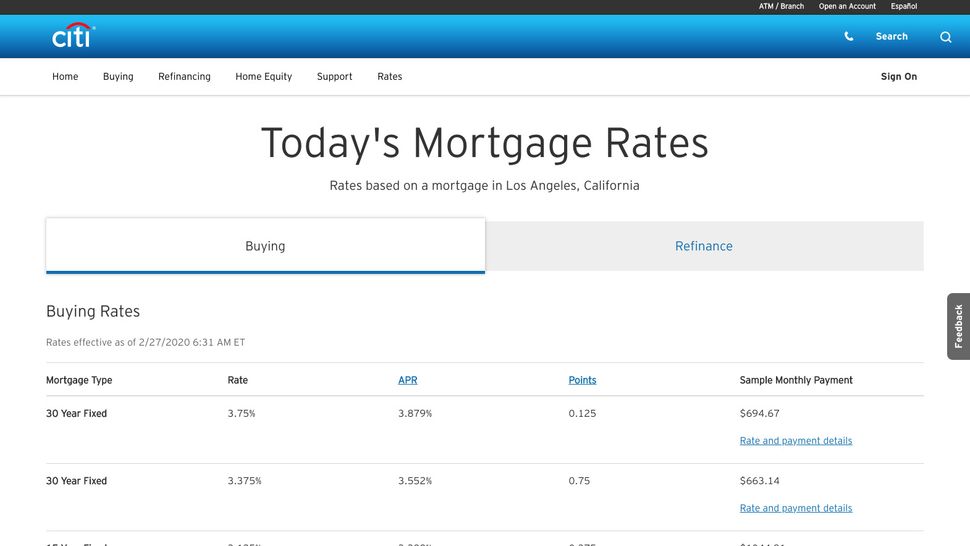
Unlocking the best mortgage opportunity for your dream home starts with understanding your options. Citibank offers competitive mortgage programs, but exploring alternatives can help you find the perfect fit. This section provides insights into comparing Citibank with other major lenders, highlighting advantages and disadvantages for various borrower profiles.
Citibank Mortgage vs. Other Major Lenders
Comparing Citibank's mortgage applications with those of other major lenders involves evaluating several key aspects. Different lenders specialize in various loan types and have varying approval processes. Factors such as interest rates, fees, loan terms, and customer service play a crucial role in the decision-making process. Citibank, like other institutions, strives to offer tailored solutions, but understanding the nuances of different lender approaches is important.
Pros and Cons of Applying with Citibank
Citibank offers a range of mortgage products catering to different needs. A key benefit is Citibank's extensive network and streamlined online application process. However, borrowers should weigh the pros and cons against other lenders. Citibank's rates and fees, while often competitive, can fluctuate. Similarly, other lenders might offer specific advantages such as lower closing costs or more flexible loan terms, depending on the borrower's individual circumstances. Researching and comparing is essential.
Types of Mortgage Pre-Approvals
Citibank and other lenders offer several pre-approval options. These vary from simple, quick assessments to comprehensive pre-approvals that incorporate detailed financial evaluations. A basic pre-approval might offer a general understanding of loan eligibility, while a more in-depth pre-approval often requires providing more detailed financial information and potentially a credit report. The type of pre-approval selected should align with the borrower's specific needs and the stage of the home-buying process.
Common Questions and Answers
This section addresses frequently asked questions about Citibank's mortgage application process. Comparing Citibank's answers to those of competitors provides a broader perspective. Borrowers often want a clear understanding of the process and potential outcomes.
| Question | Citibank Answer | Competitor Answer (Example) |
|---|---|---|
| What is the average processing time for a Citibank mortgage? | Our processing time is generally 30-45 days from submission to closing. | Processing time typically ranges from 25-35 days. |
| What documentation is required for a mortgage application with Citibank? | Required documents include proof of income, employment, and assets, as well as credit reports. Specific requirements may vary based on the loan type. | Similar documentation is required, but specific forms and formats may differ. |
| What are the loan options available at Citibank? | Citibank offers various loan types, including fixed-rate, adjustable-rate, FHA, VA, and USDA loans. | Competitor options might include specialized loans for first-time homebuyers or those with non-traditional income. |
Post a Comment for "Citibank Mortgage Application Your Dream Home Awaits"